
08/26: Becoming More Human
Volume 37 — Three years of field notes, reflections, and observations on emotionally intelligent leadership, human development, and the systems that shape culture.

👉 Exploring a leadership, culture, or human development challenge? I'd love to think alongside you. click here
✍🏼 Editor’s Note: It Starts With Identity
Lately, I’ve been thinking less about leadership strategies and more about leadership identity.
One of the questions I keep coming back to is why human development becomes deeply embedded in some organizations while remaining an initiative in others.
I don’t think the difference is better programs, more training, or stronger frameworks.
I think it’s identity.
The leaders who build healthy cultures don’t just practice emotional intelligence at work. They see people, relationships, and leadership through that lens wherever they go—at work, at home, at their children’s sporting events, at the grocery store, in difficult conversations, and in moments of conflict.
It’s not something they turn on when they step into the office.
It’s part of who they are.
And I think that’s why this work becomes sustainable.
When human-centered leadership is rooted in identity, it naturally shapes how leaders make decisions, build relationships, respond under pressure, and ultimately design the systems around them. Trust isn’t a program. Belonging isn’t an initiative. Wellbeing isn’t another priority competing for attention. They become expressions of how a leader sees people and what they believe leadership is for.
That’s why I don’t think organizations become human-centered simply by adopting new practices.
They become human-centered because the people leading them have become human-centered.
Everything else flows from there.
Maybe that’s the invitation for all of us.
Not simply to ask, “What should I do differently as a leader?”
But to ask,
“Who am I becoming?”
Because culture is shaped less by what leaders know than by who they are becoming.
We are stronger together,
Griffin
🤔 A Question I've Been Sitting With: Becoming an Emotional Ally
Just this past week, I had the opportunity to attend the TISEI 10th Congress of Emotional Intelligence at Yale. I'm still taking time to digest a few days filled with learning, meaningful conversations, and new questions about how we continue advancing emotional intelligence and human development.
But one idea has stayed with me.
Who has an Emotional Ally because of me?
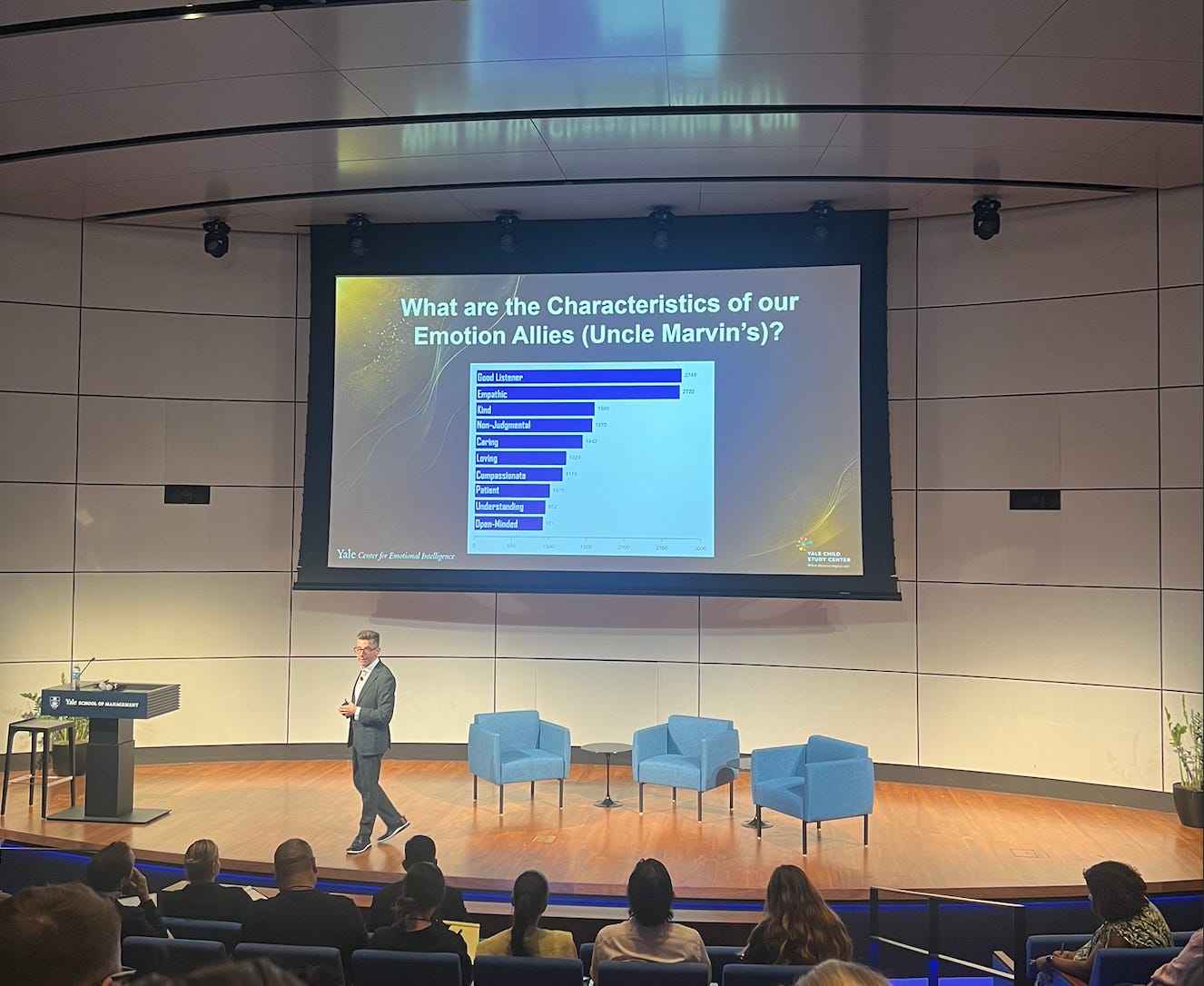
Researchers at the Yale Center for Emotional Intelligence are exploring the emerging concept of Emotional Allies. Rather than asking people what emotional intelligence looks like, they asked thousands of individuals to describe the people they turn to when they’re struggling emotionally.
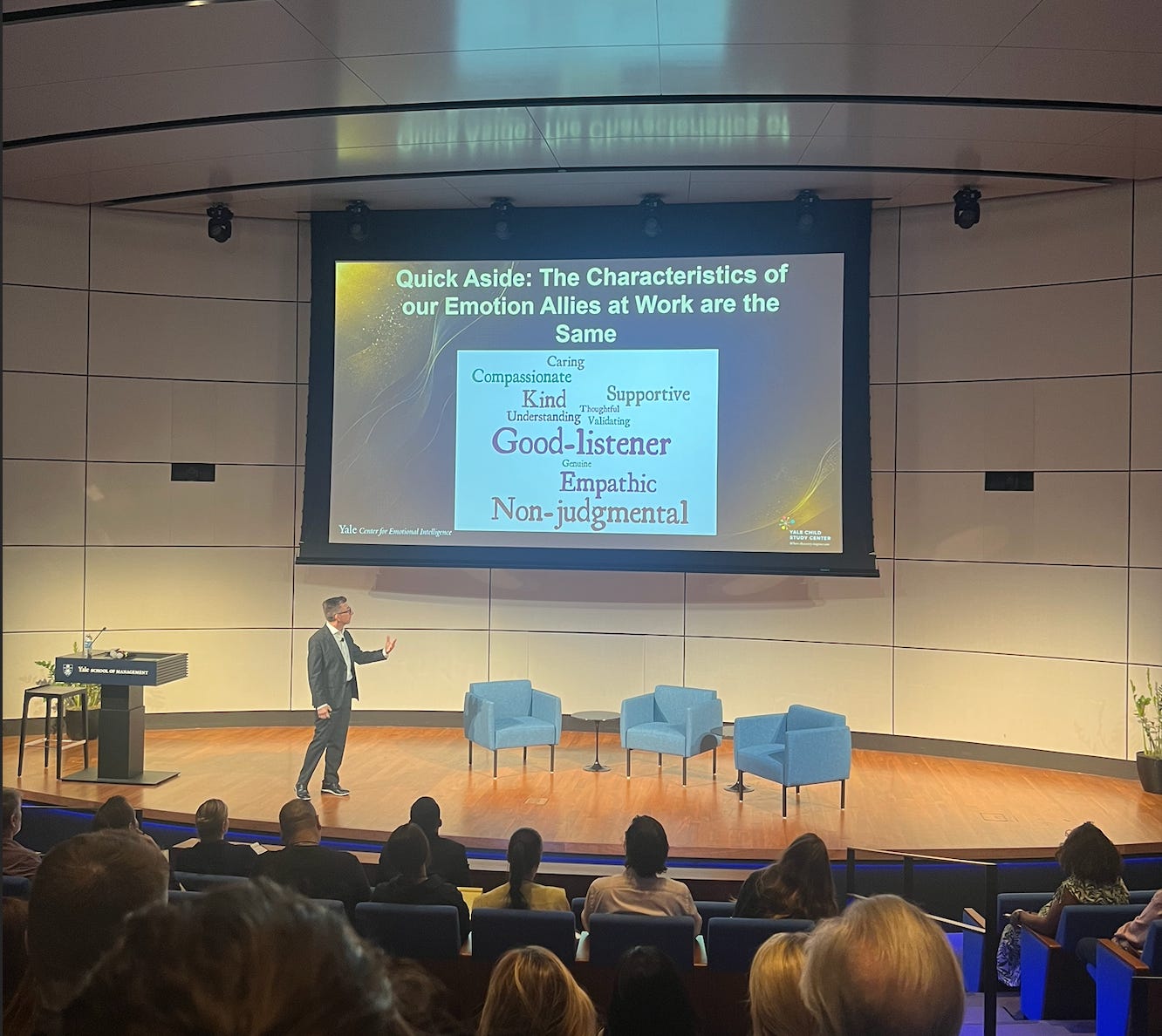
The responses weren’t what many of us might expect.
People didn’t describe the smartest person in the room.
Or the best problem solver.
Or the person with all the answers.
Instead, they described people who were:
Good listeners
Empathetic
Non-judgmental
Kind
Caring
Compassionate
Patient
Understanding
An Emotional Ally isn’t a therapist, fixer, or rescuer.
It’s someone who creates the conditions for others to feel safe enough to be honest, make meaning of their emotions, and navigate challenges without feeling diminished or dismissed.
What I appreciate most about this idea is that the focus isn’t on whether we had an Emotional Ally growing up. It’s on whether we’re becoming one for someone else.
Through warmth, listening, empathy, compassion, and steady support, we create the psychological safety that allows people to grow.
It’s also a meaningful reminder that emotional intelligence isn’t something you either have or don’t have.
It’s a human capacity that can be developed over time.
So this month, I’ve been sitting with a few questions, and I’d invite you to reflect on them as well:
Who has an Emotional Ally because of me?
How do people experience me when they’re struggling?
Where is there an opportunity for me to grow?
Whether you’re leading a team, raising children, supporting a colleague, or showing up for a friend, perhaps one of the most important things we can become is someone others feel emotionally safe with.
🎙️ Podcasts I’m Tuning Into: How to Master Your Emotions with Dr. Marc Brackett
One of the conversations I’ve continued thinking about this month is Dr. Marc Brackett’s discussion on mastering our emotions.
What I appreciate most is that it reinforces a theme running throughout this month’s newsletter:
Emotional intelligence isn’t something you either have or don’t have.
It’s something we can continue developing throughout our lives.
Whether you’re leading a team, raising a family, or simply investing in your own growth, this episode offers practical, research-backed ways to strengthen one of the most important human skills we have.
🤝 In Practice: Building the Center for Human Skills
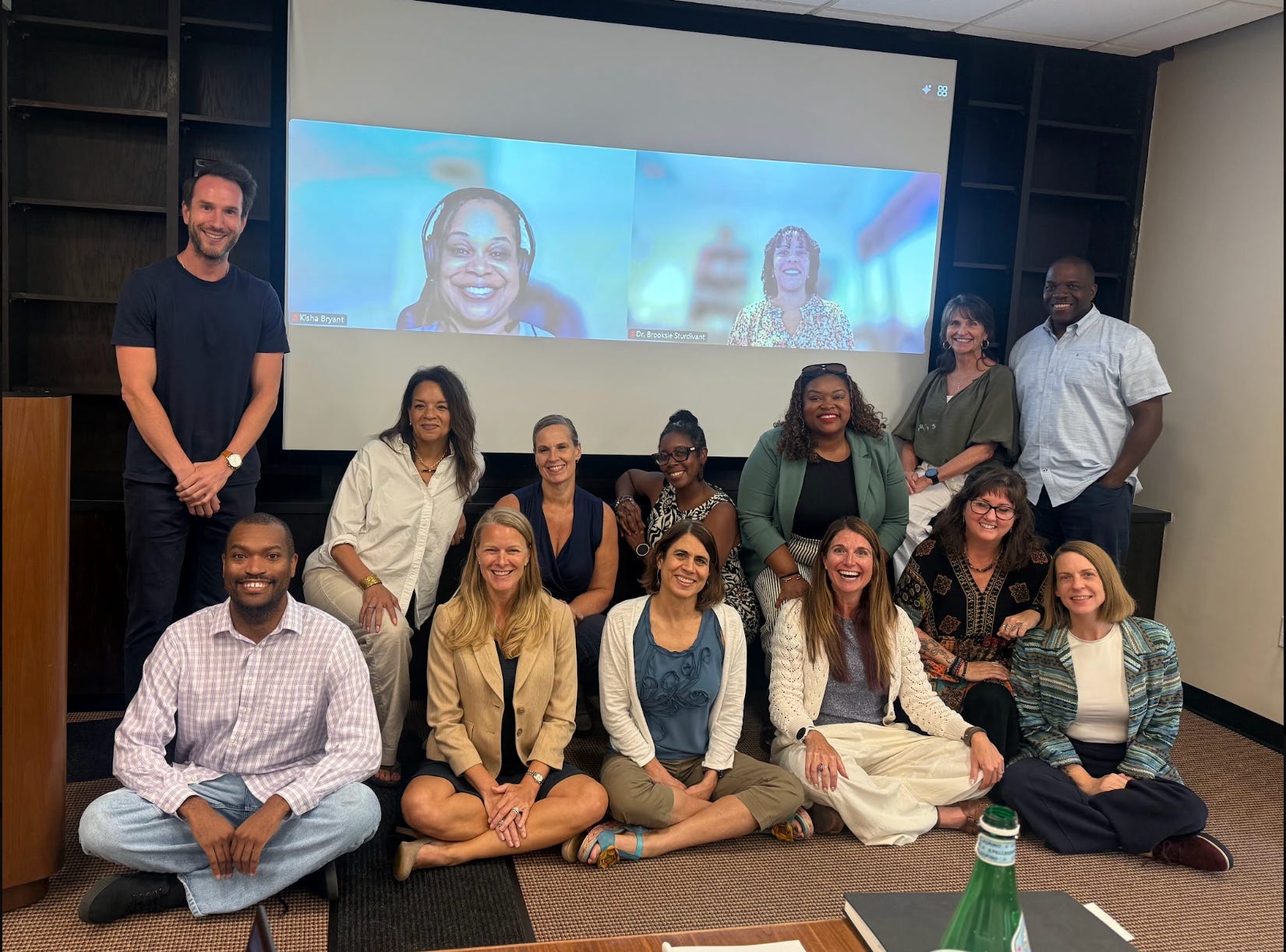
A couple of weeks ago, our leadership team gathered for the Center for Human Skills Summer Retreat as we continue the transition from SEL4NC, a grassroots alliance, to the nonprofit Center for Human Skills.
As we looked ahead, one thing became increasingly clear: the work we’re building isn’t for one sector. It’s about strengthening the human skills that help people connect, lead, and live well wherever they are.
That’s why the Center for Human Skills exists.
Our purpose is to strengthen human connection, grow the skills people need to connect, lead, and live well, and advance whole-person wellbeing across the lifespan.
Whether in education, business, healthcare, nonprofits, or community organizations, we continue to see the same opportunity: investing in the human skills that strengthen relationships, leadership, wellbeing, and the systems people experience every day.
We’re still early in the journey, but I’m incredibly encouraged by the people, organizations, and partners choosing to build this alongside us. Together, we’re creating the foundation for work that we believe can contribute to a healthier, more connected North Carolina, and ultimately, a broader conversation about what it means to intentionally develop people across the lifespan.
If you’re interested in learning more, exploring a partnership, or connecting around this work, we’d love to hear from you.
📩 info@centerforhumanskills.org
Where This Work Lives
Everything I am building and a part of is rooted in one core mission: human development. Whether through my doctoral research at the University of North Carolina at Chapel Hill, founding Come Home Collective, or helping build the emerging Center for Human Skills, this work is centered on how people grow, how leaders lead, and how systems create the conditions for trust, belonging, and sustainable change.
If this perspective resonates and you are thinking about how to center human development in your leadership, culture, or systems, I would welcome the opportunity to connect.
— Griffin
Follow Along
✍🏼 Writing & reflections → LinkedIn
💬 Long-form thinking → Newsletter
🎙 Conversations → Podcast
🎥 Behind the scenes → Building Come Home (YouTube)
Curious about emotional intelligence, leadership, or culture?
You’re welcome to explore a question here.
Dear Griffin, I just read your reflections and I am very moved the work that you were doing to spread the positive and the hopefulness that you create for humanity is something extremely important important. I’m sorry that I did not get more time to speak with you at the conference. But when I just read through all that you were doing, I was extremely moved. If more people thought about our human development, we might have a chance to strengthen ourselves and ready ourselves for the future ahead. Please let me know anyway that I can contribute and let’s set up that Zoom meeting that we’ve been talking about. Much love and respect Dr. Patti